Connect Game - Part 1
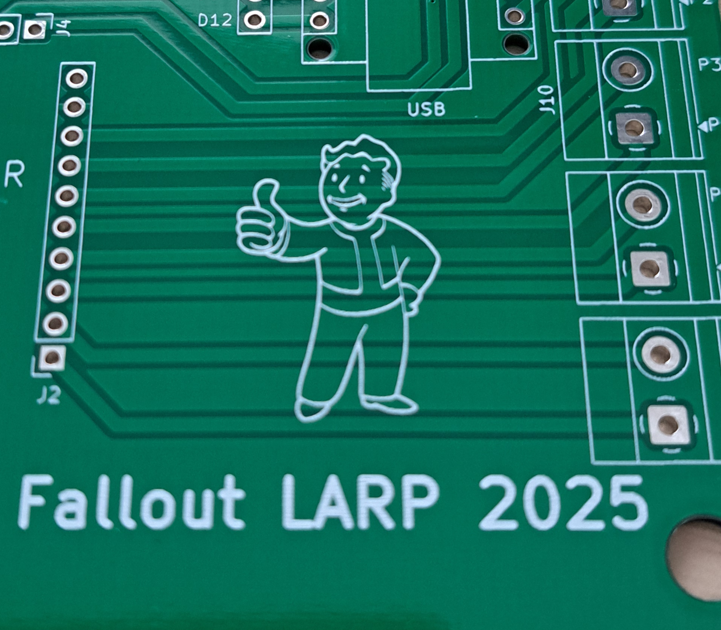
I was approached by a friend of mine, who is one of the organizers of a Fallout-themed LARP event:
👉 https://fallout.overseers.cz/
He asked me if I could help with an in-game activity.
And well… I do love a new challenge.
Project Overview
The idea is fairly simple:
An electronic device for a logical mini-game used during a Fallout LARP.
The device exposes GPIO pins and power lines, allowing for potential future extensions and modifications.
Project Goal
The device should support two different game modes:
1) Guided Mode
- The player has a single wire
- An OLED display shows which two GPIO pins should be connected
- The player has a limited time to connect them correctly
- After success, a new random pair is displayed
- After a predefined number of correct connections within a time limit, the game ends
- The player is rewarded with a “secret” (for example, a code)
2) Discovery Mode
- The player has multiple wires
- The correct GPIO connections must be discovered through gameplay
- Once the correct combination is connected, the device reveals the secret
First Prototype
So I quickly put together something in KiCad and sent it off to PCB fabrication (JLCPCB).
A few weeks later, the boards arrived and… well.
I messed up 😅
Specifically, I mirrored the GPIO extender (AW9523R).
Since there were no official KiCad libraries available, I created my own footprint — and got it wrong.
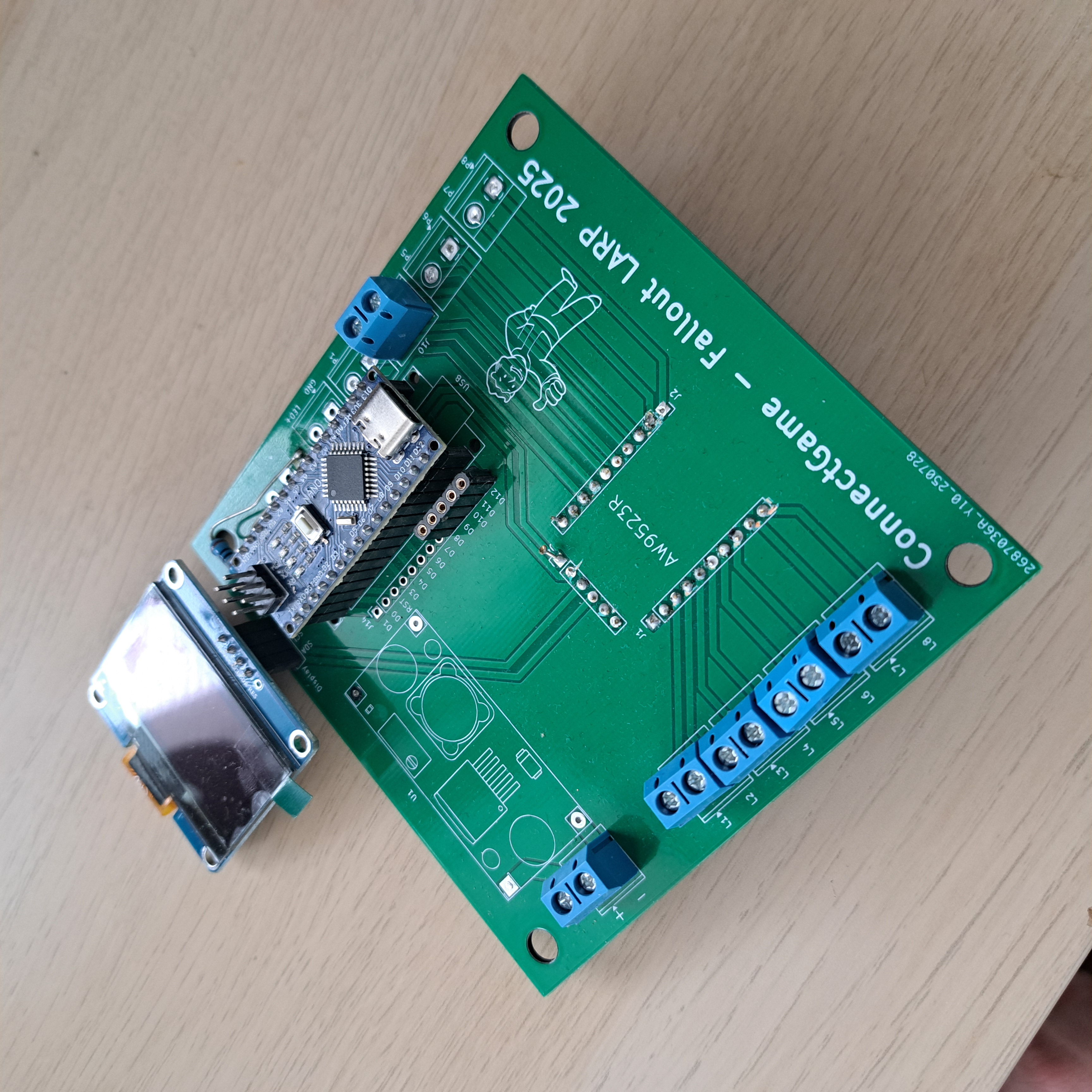
Stuff like this happens.
On the bright side, it gave me a chance to spend some time with a soldering iron.
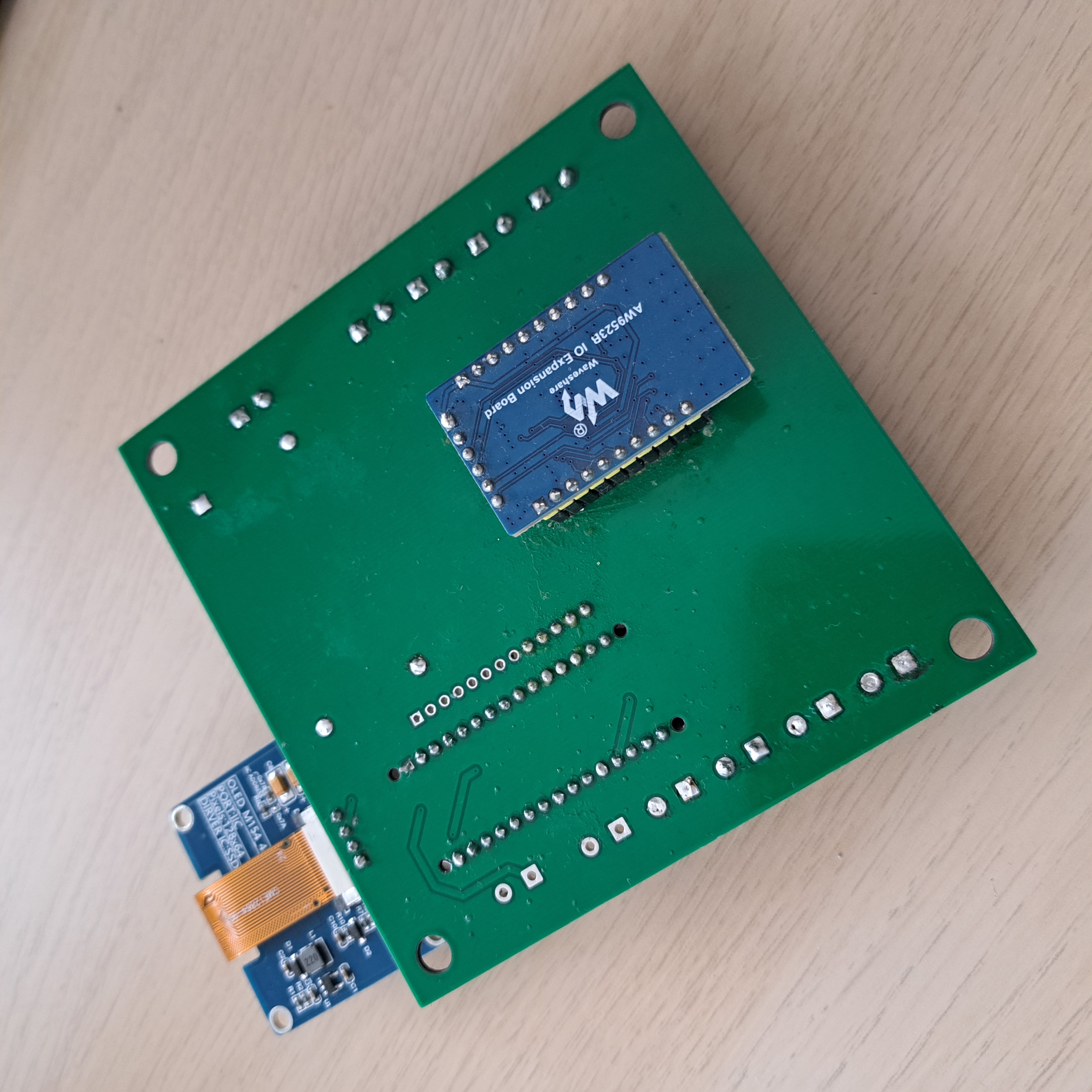
I ended up re-soldering the GPIO extender on the other side of the board, and after some fiddling with the firmware, it kind of worked…
…but it was far from ideal.
The Real Problem
The biggest issue (aside from the mirrored chip -_-) turned out to be the need for pull-up resistors.
For the game logic to work reliably, the GPIO pins needed to be pulled to +5V.
After testing everything on a breadboard, it finally behaved as expected.
Which means only one thing:
👉 back to PCB fabrication we go 😄
What’s Next?
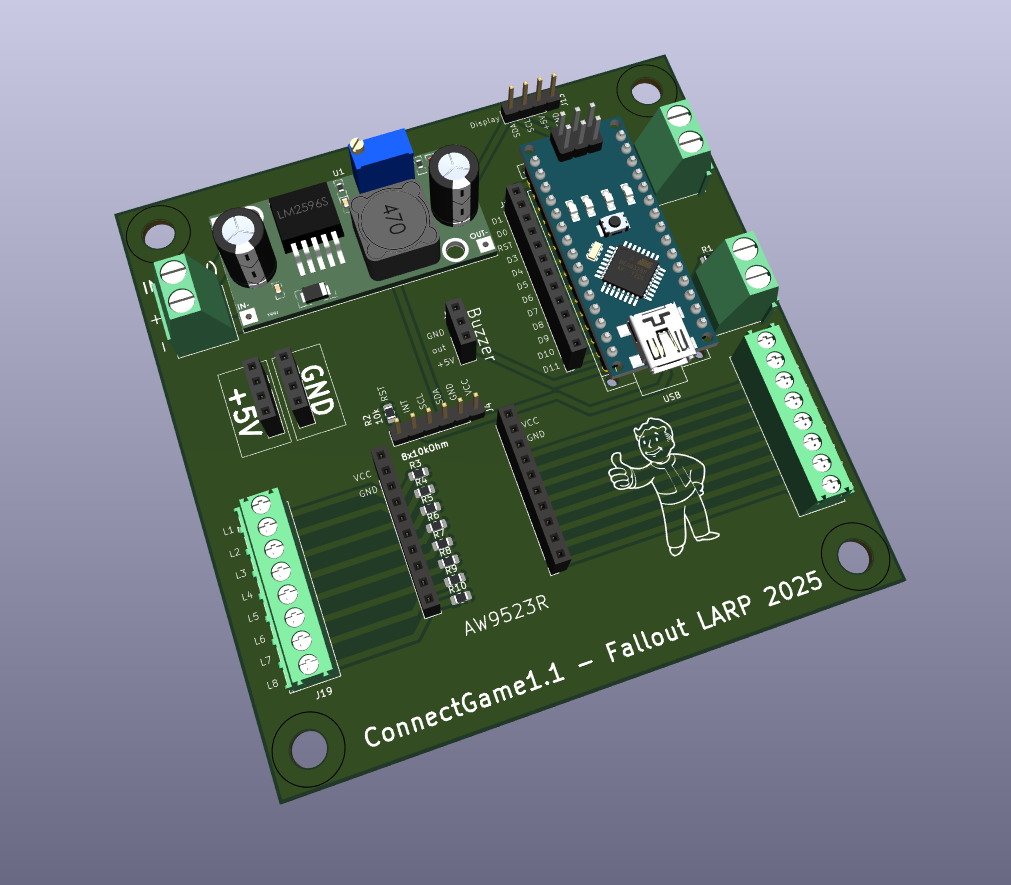
The next revision should fix:
- the GPIO extender orientation (lesson learned)
- proper pull-up resistor implementation
- overall reliability of the game logic
Stay tuned for Part 2.